Car Service Record Management System
High-Level Design
System Architecture
Based on the system's requirements, we identified five main components. The database, REST API (authentication module, DAO Module, and Request Handler Module), and The five core components are the five core components. Each of these components belongs to one of three tiers in a multi-tier design. The data tier is in charge of data storage and retrieval. The database module is included in this tier. All business logic, including permission and access control, is handled by the application tier. This tier is made up entirely of the REST API, which is made up of the Authentication module, the DAO module, and the Request Handler module. The presentation tier serves as the system's external interface. The web application is part of this tier. In the presentation tier, the web application talks to the REST API modules in the application tier, and the REST API talks to the database module in the data tier.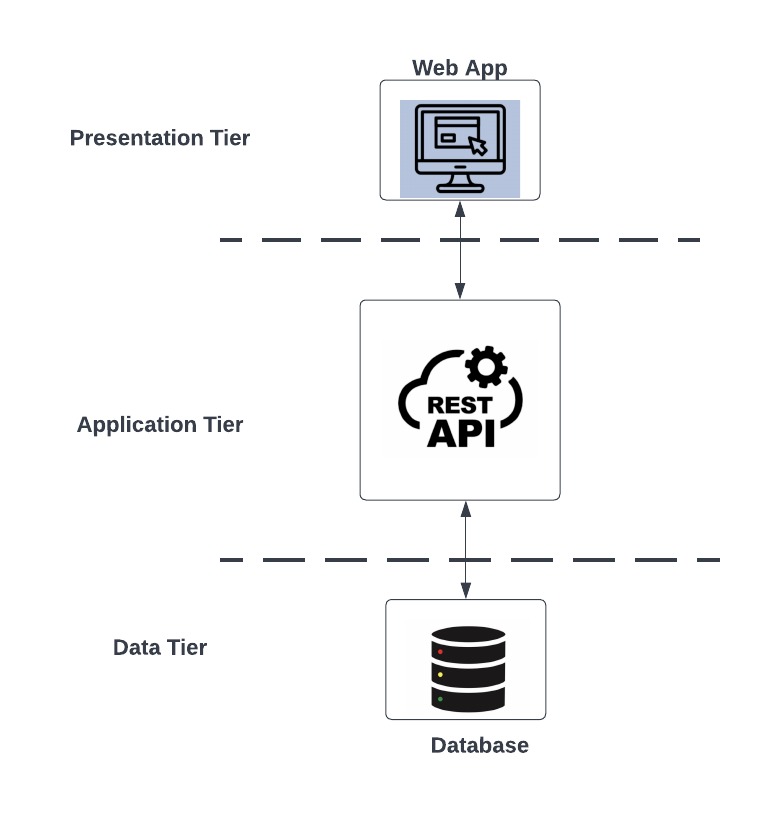
(Figure 6) Overview of our system
It is important for us to define modules in a way such that the application behaves in a cohesive manner and performs all the functionalities. The basic workflow of this application is as follows:
- Request Handler module: This module is responsible for handling the requests made by the client and validating them by either giving an invalid request response or continuing processing the requests.
- Authentication module: This module is responsible for authenticating the clients. This will make sure only certain users are given the permission to edit or update certain data on the website. Whenever a user tries to log into the website, they will first be authenticated, and then they will be logged in.
- DAO module: This module is responsible for connecting the database module through any request that is made. This module contains all the queries that will fetch all the data from the database. This is the only module that will connect to the database.
- Database: This module is responsible for providing all the functionalities of a database to the website. When a user requests a service, the website will pull up data that is stored in our database and display it to the user.
Database design
Databases are an important part of every web application because they provide the application with the ability to retrieve, store and handle all the data. There are several popular types of databases: relational, key-value, and document based with their own benefits and drawbacks. Relational databases are used to store the structured data.
The primary key for the majority of the entities defined in the data model will be a number. This identifier will be produced automatically by the database and won't reveal any extra information about the entity it represents. Using the IDs and a foreign key constraint, certain entities will relate to other entities. Additional restrictions will be set to enforce unique rules that will be defined for certain of the data stored in the system to ensure data integrity. Lastly, effective data retrieval is required. We shall define the necessary data indices for this. We will choose Azure SQL database service to host databases due to its superior cost and performance in comparison to other cloud providers.
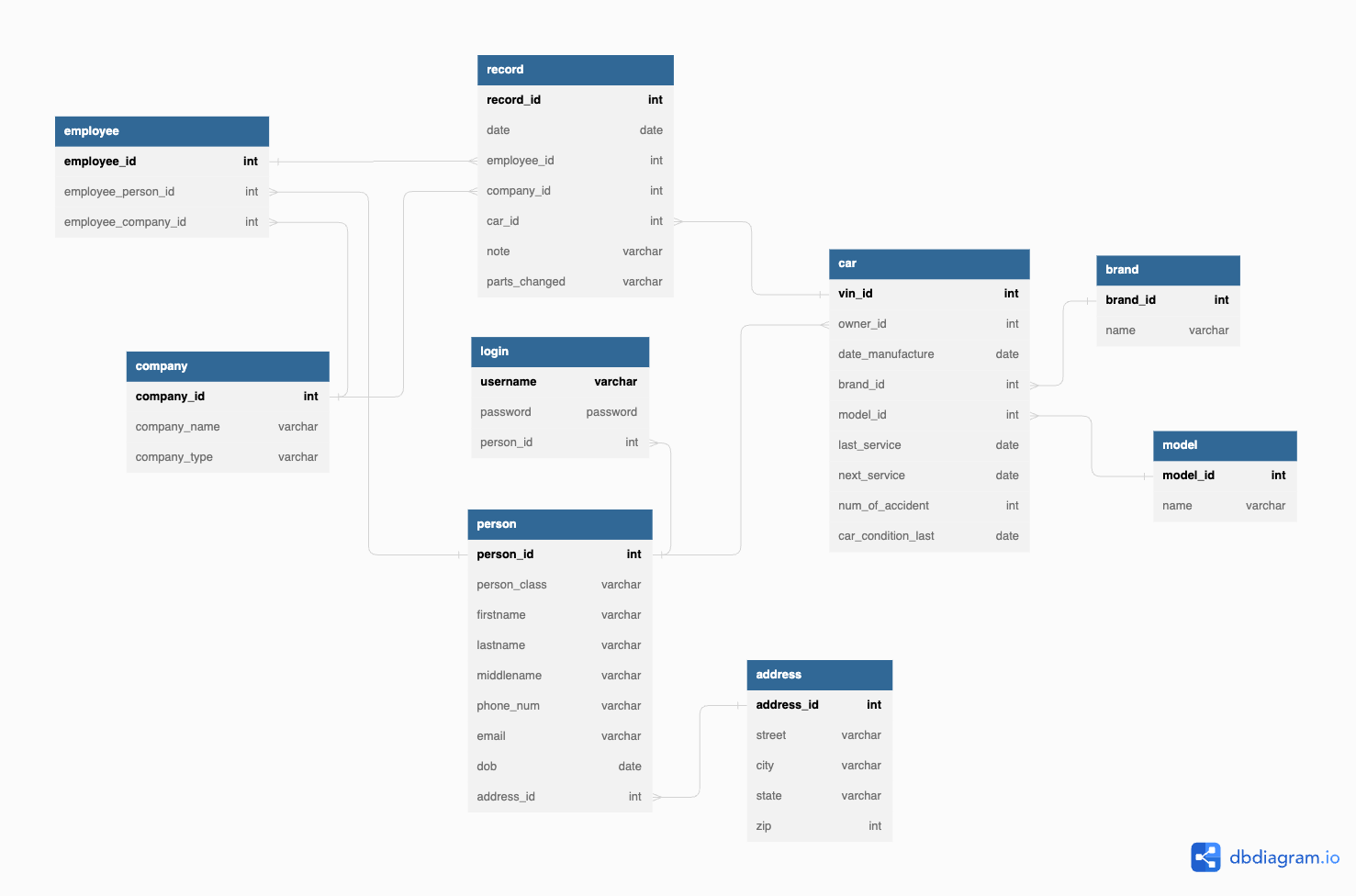
(Figure 7) Database Design
Web Application Design
Using the SPA approach has a number of benefits. The first is that, since only one page is used and is rewritten based on what the user does, the page does not need to be reloaded when switching between pages. This keeps the user experience smooth and makes it work like a normal desktop app. Additionally, the web page only loads once, and any additional code (such as HTML, CSS, or JavaScript) is only loaded when the user interacts with the page or as needed. This will make page loads faster and reduce the overall load on the server, which will make the user experience better and meet NFR-8.
React, a JavaScript toolkit for making user interfaces (the "view layer"), will be used to make the application's front end. The program will be divided into a number of independent, self-contained modules, which will speed up development and make it simple to reuse components across the entire application. React employs a virtual DOM, which makes loading multiple views quick and efficient. It also lets apps run smoothly on a variety of platforms and devices, including mobile, which will also be a key part of our system. We will also use Redux because it will be hard to keep track of all the different states of our complex and large application. Managing application state is easy with Redux, an open-source JavaScript toolkit that is incredibly lightweight. This will help us to make sure that we are always providing the user with accurate information and that the program is responding appropriately to user input.
Backend Design
For the backend we are using the REST API which will be crucial to the system's operation. It will provide a common language for dealing with the data and house the majority of the system's business logic.
DAO
DAOs help setting up the database connection and interacting with it by sending SQL CRUD commands.They also communicate with the clients to provide and obtain data.
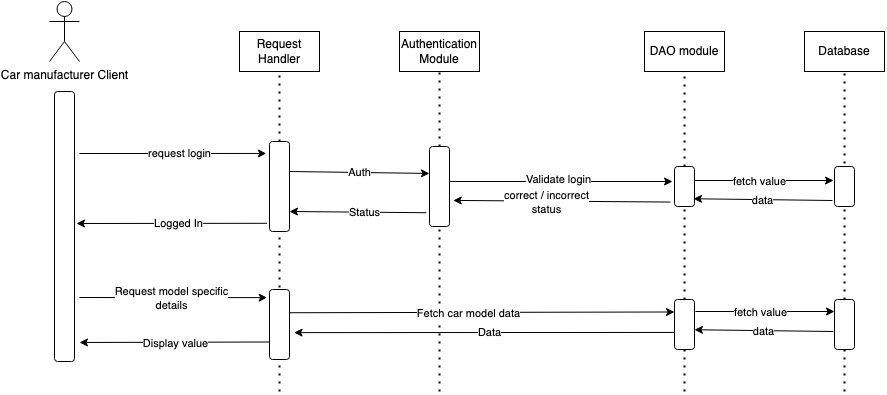
(Figure 8)Car manufacturer Sequence Diagram
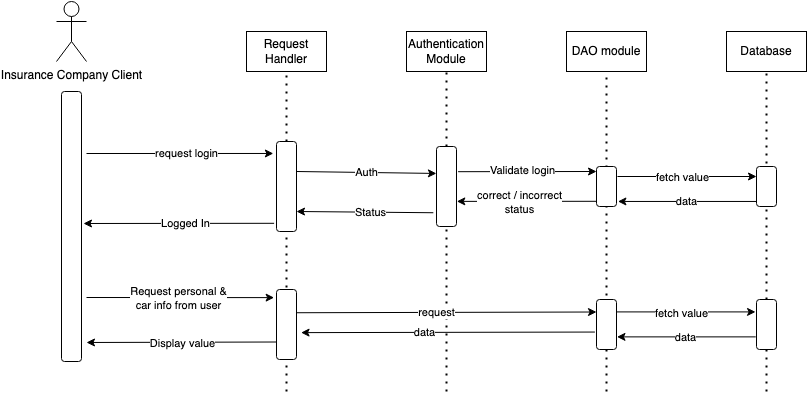
(Figure 9) Insurance Company Sequence Diagram
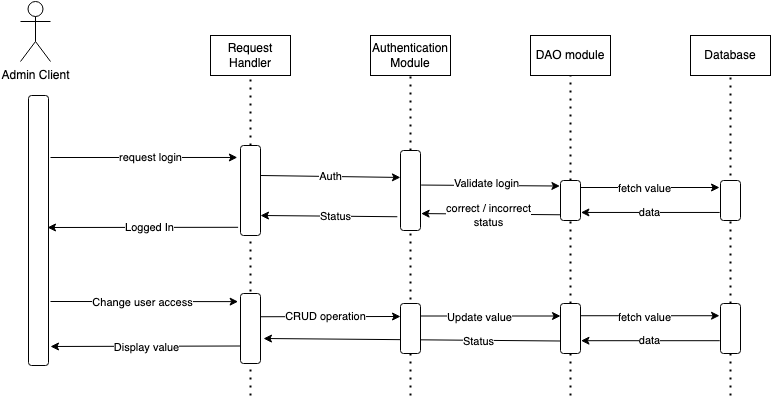
(Figure 10) Admin Sequence Diagram
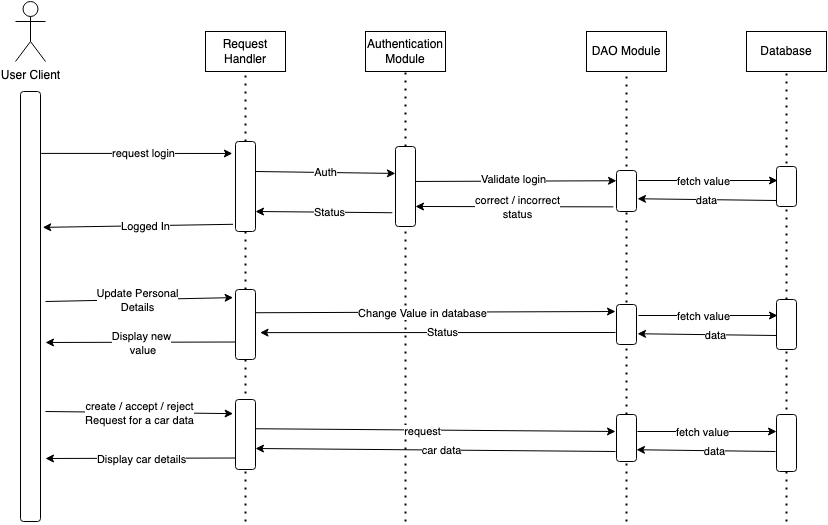
(Figure 11) General User Sequence Diagram
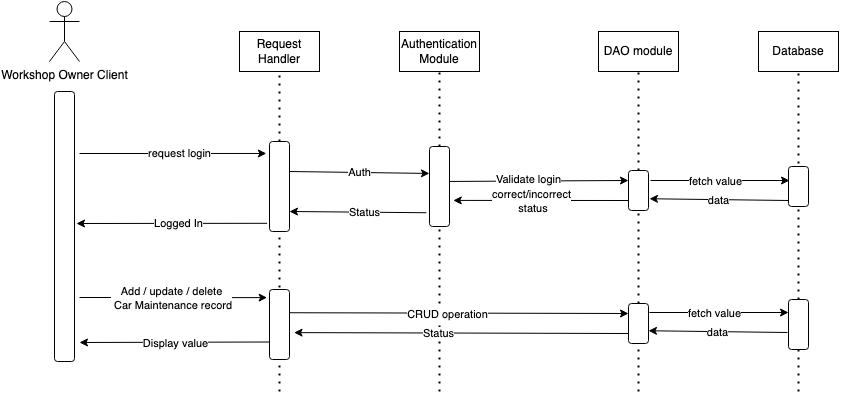
(Figure 12) Workshop Sequence Diagram
Traceability Matrix
Functional Requirement Traceability Matrix
| Web Application Component | Authentication Module | Request Handler | Database Component | Additional Services (Azure) | |
|---|---|---|---|---|---|
| FR-1 | X | X | X | X | |
| FR-2 | X | X | X | ||
| FR-3 | X | X | X | ||
| FR-4 | X | X | X | ||
| FR-5 |
X | X | X | ||
| FR-6 | X | X | X | ||
| FR-7 | X | X | |||
| FR-8 | X | X | X | ||
| FR-9 | X | X | |||
| FR-10 | X | X | X |
Non-Functional Requirement Traceability Matrix
| Web Application Component | Authentication Module | Request Handler | Database Component | Additional Services (Azure) | |
|---|---|---|---|---|---|
| NFR-1 | X | X | X | X | X |
| NFR-2 | X | X | X | ||
| NFR-3 | X | ||||
| NFR-4 | X | X | X | ||
| NFR-5 |
X | X | X | X | X |
| NFR-6 | X | X | |||
| NFR-7 | X | X | X | X | X |
| NFR-8 | X | X | X | X | X |
| NFR-9 | X | X | X | X | X |